LATEST:

All my current activity in relation writing SFF stories can be found at my website, www.robincmduncan.com Hyperlink in the post below.

Labels

Film (70) Music (12) Photography (6) Television (1) Writing (3)

Sunday, 2 June 2013

Here Comes The Summer


'Summer Wars' is another excellent exponent of the Japanese anime genre, directed by Mamoru Hosoda, whose modest (so far) directorial cannon includes 'The Girl Who Leapt Through Time' (not to be mistaken for one of the Stieg Larsson trilogy!), which is also highly enjoyable. This film is a lively and colourful affair, nicely evoking the optimism and energy of the season, and its large cast of characters is well drawn in both senses, each one sketched with enough care and detail to be believable and interesting, and to make their own distinct contribution to the story, despite there being some twenty family members or so to deal with, no mean feat.

The plot is bedded in the technology of future, an almost ubiquitous theme for the genre, but the story’s posit of a worldwide virtual network to which every financial institution, emergency service and government agency links, and indeed some cedes control of its systems, is hardly Science Fiction! Events take a turn for the worst of course, but despite the action being centred on a bright and colourful online world, and a plethora of cuddly personal avatars, Hosoda invests the conflict with a dark malevolence that is convincing, and delivers a real sense of threat.

‘Summer Wars’ may look at first glance like a kid’s film, but don’t dismiss it as ‘some kind of Pokémon’, the film delivers some emotional passages and a sweet central relationship that you will root for. All in all very satisfying for fans of the genre, and has something to offer those who are not. For me, the final note strays from the tone of the piece, but that is a minor quibble. Treat yourself to a dose of optimism.

Grim Down South

‘Beasts of the Southern Wild’, an undeniably lyrical and poetic work from Benh Zeitlin, written with Lucy Alibar and based on her stage play, has many passages of joyous originality, and the film ably captures the child’s perspective in Hush Puppy’s mostly intelligible narration, but remains stuck there for the duration. This becomes tiresome after a while, but there is still much to admire in the performance of Quvenzhané Wallis, and that of Dwight Henry as her father. There are many visually captivating scenes, and a beautiful, if grungy, quality throughout, but the substance was a source of irritation for me. Perhaps the child’s perspective is the excuse that allows the reality of the situation in the Bathtub to be overlooked, but questions arise such as where does the fuel for the boats come from, the electricity in the light bulbs, the gas for cooking and the ubiquitous alcohol?

I feel that these questions should have been answered, and the biggest problem with the film in my view is that the interaction of the characters with the outside world seems to be something that was swept under the carpet for the most part. The denizens of the Bathtub enjoy benefits (no doubt literally, as no-one seems to produce anything other than perhaps to feed themselves, and there is no indication of anyone working per se), but do not seem to accept the existence of the wider world, or certainly any responsibility towards it.

In the end, it is difficult to know what to take from the film. It is certainly uplifting in some of its philosophical sound bites, and Hush Puppy makes an emotional journey that is affecting, but there are too many events without consequence or explanation, and these feel like holes. Beautifully filmed, with engaging performances and an excellent and often uplifting soundtrack by Dan Romer and Benh Zeitlin, and if nothing else entirely justified in its dire warnings of the potential for global disaster, but ultimately it left me wanting something more.

Saturday, 1 June 2013

Push The Other One

'Push' is clunky from the get-go, weighed down by expositional dialog that sounds distinctly Matrix-y (in a bad way) in its tangential obscurity. The subject matter is hardly new, or even handled in a particularly innovative way, and although some of the effects are nicely done, it is not enough to redeem the whole. The plot is pedestrian to the point of boredom, disappointingly linear for a film that tries to be edgy and cutting edge. Everything happens the way it needs to in pursuit of the story, and the few character conflicts beyond the tired pursuit trope are unconvincing. The film suffers badly from the absence of real jeopardy, and none of the opposition carries any kind of real menace. Sure, there is plenty of chatter about the fact that they’re ‘all going to die’, but there is nothing to suggest any prospect of it actually coming close, and the constant references to this supposed danger render it meaningless.

This is yet another example of the current trend for style over substance. Witness the closing of a bathroom door when two people are inside even though there is no-one else in the apartment, it can be for no other reason than an attempt at stylish flourish, but the effect is to shut out the viewer, breaking the 4th wall and bringing the audience out of the moment. And yet where there are opportunities to make an impact (for example a fleeting touch on the subject of underage drinking), the film shies away from these, eschewing any real edge, no doubt in pursuit of its ‘12A’ certificate. Chris Evans and Dakota Fanning have both done much better work, and there a sense of lack of belief in the material, and not just in front of the lens. No-one seems to be breaking sweat here.

The sparseness of the soundtrack is effective in places, but horribly shattered by the clumsy introduction of ‘mood music’ in a music video style, instructing the viewer how to feel, just another example of the employment of these crude techniques to reel in the younger audience, which has been pummelled with such ham-fisted lifestyle marketing from before it exited the womb.

For me the only significant credit here goes to the location scout. China appears as a bright and colourful place, the locations unfamiliar and exciting, and it is really only when these exotic urban exteriors are in frame that there is any sense of dynamism. Moral? Rent a DVD from the China National Tourist Office instead.

Howling For Joy


‘Howl’s Moving Castle is an outstanding animation from Hayao Miyazaki, a captivating story with interesting characters, despite the presence of some familiar fairytale tropes (transformation, inanimate objects that move and talk, magicians and witches, etc.) there is a freshness and invention to the whole thing that makes it enthralling. I don’t think it is an exaggeration to say that Miyazaki has picked up the baton that Disney dropped many years ago when merchandising seemed to become as important for them as the film itself. Witness their need to buy Pixar to obtain anything approaching a relevant and interesting line in animation. Mizazaki’s movies will hopefully become as well loved as Disney’s early work. There’s far less of the dripping sentimentality of some works from the House of Mouse. Howl’s Moving Castle deserves to become a modern classic, highly recommended for children of all ages.

Sunday, 22 July 2012

We’re Not In Slough Any More...


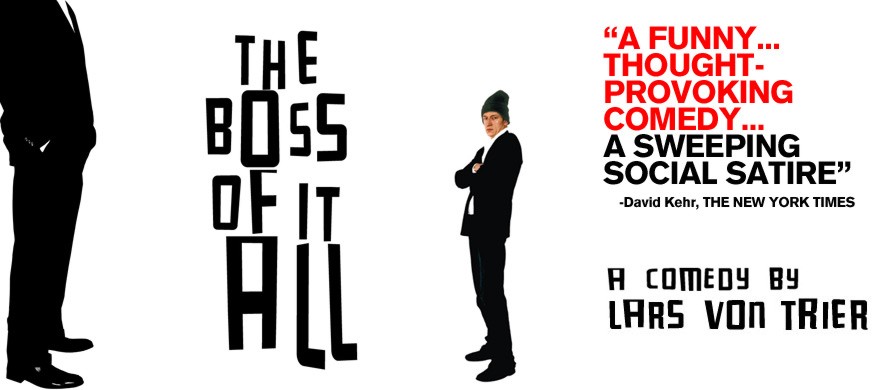
'The Boss Of It All' is a wonderfully judged dry-as-a-bone comedy from Lars Von Trier, a likeably eccentric bunch of desk jockeys are led by an excellent central performance from Jens Albinus (Dancer in the Dark, The Idiots), with strong support from Peter Gantzler (Smilla’s Feeling For Snow); Iben Hjejle (High Fidelity) and Sofie Gråbøl (The Killing).


The story is nicely complex and suitably farcical, and there are touches of simple genius throughout, from nicely timed chapter headings in the form of Von Trier’s periodic sardonic narration, to the ‘careless’ editing that keeps the film grounded in ‘reality’. Albinus has a lovely comic touch, but LVT is the star, more comedy please, Herr Von Trier!

The Chilling


Unremittingly depressing Icelandic crime story, everything about it is miserable, the palette of colours, the settings, the scenery, the people, the food – definitely not sponsored by the Iceland Tourist Board. Jar City makes ‘Wallander’ (the Swedish version) look like Miami Vice – not a Faroe Island jumper in sight. The plot follows Ingvar Eggert Sigurðsson’s hard-bitten cop Erlendur on a murder investigation that leads into the past. There are good performances here and solid direction by Baltasar Kormákur, who has just completed ‘Contraband’ (as of late 2011), directing Mark Wahlberg, Giovanni Ribisi and Kate Beckinsale.


There are some mechanical difficulties, like certain sections of flashback which are hard to pick up because there is no visual distinction between with the main action, and the subtitles are too fast in places with no obvious reason. But if you like your cops gritty, your stories grimy and your locations grey and inhospitable then you will probably enjoy this. Ultimately it is in the same territory as the likes of ‘Spiral’ and ‘The Killing’, and the story perhaps suffers a bit from not having the same amount of time as these for the viewer to become immersed in the detail, but Jar City is a good film and well worth the rental if you are looking for a gloomy thriller.

Saturday, 21 July 2012

Pitt / Slater


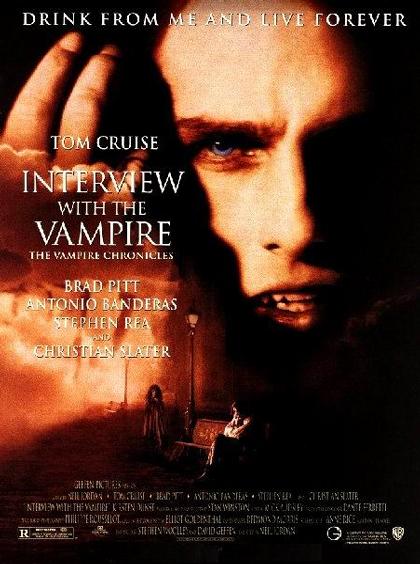
Before there was True Blood; before there was Twilight; before Buffy, Angel and Vampire Diaries (pah!), there was 'Interview with the Vampire'. An excellent adaptation of Anne Rice’s first novel, Tom Cruise’s 'Lestat' leaps off the page in all his pomp and swagger. Pitt’s 'Louis' is the ideal foil, righteous and idealistic, their partnership melded by Kirsten Dunst’s 'Claudia' – a terrific performance at the age of twelve.

Neil Jordan has a good cast and employs them all well, brilliantly capturing the scope of the story and the essence of its characters. The soundtrack also deserves star billing, a spellbinding collection by Elliot Goldenthal that captures not only the action, but the locations and the era.

To me the cleverest layer in Rice’s story, from which she adapted the screenplay herself, is the commentary on the inability of some vampires to change with the times, ably highlighted in the closing scenes and the final moment on the Golden Gate Bridge, one of my favourite uses of popular music in film, and so very, very right for that wonderful closing line reprise. There is beauty and ugliness in equal measure, and a grand sweep of storyline that beautifully captures the span of time and the weight of years, the excitement and the enui.


Interview... is a great watch, a thrilling journey full of anguish and melancholy, glamour and guts – showing that vampires are by no means the ‘youthful’, glossy, beautiful creatures that the networks and studios now want you to believe for the purposes of primetime. So many 80’s movies do not stand the test of time, but this is one that will never grow old – a must for your list if you have never seen it.

The Girl with the Older, More Intelligent (Swedish) Sister


To start with I have to eat some words. I said in another review that I wouldn't see this film because I didn't want to tarnish my memory the superlative Swedish original and as a (very) minor protest against the crassness of Hollywood in remaking it, but I did see it after all.

It’s an excellent cast, even if there are only two Scandinavians (the superb Stellan Skarsgard, and Yorick van Wageningen as Bjurman) among the main players. Daniel Craig is, thankfully, not all action, which would have been inappropriate. Christopher Plummer is faultless as Henrik Vanger, and Steven Berkoff delightfully mysterious as his lawyer Frode. Skarsgard’s portrayal of Martin Vanger is also superb, although the character’s more subtle traits have been lost between book and script.

The inevitable question is how does it compare to the original film? The answer, pluses and minuses. Rooney Mara’s performance is excellent, but I found her portrayal of Lisbeth Salander a bit too repressed, almost dispassionate in places, compared to Noomi Rapace’s definitive original, and I was not entirely convinced by Yorick van Wageningen’s take on Bjurman, although it must be an exceedingly difficult role to play. Craig’s Blomkvsit has much to recommend it, but I think he is too dynamic compared to Michael Nykvist’s original. As a whole I think Fincher’s version is a bit too slick, diluting the sense of dogged investigation that serves the source material better.

Trent Reznor and Atticus Ross’s soundtrack for Fincher’s last, ‘The Social Network’ is note perfect, here I found it invasive to begin with, and although the musical interludes settle down, the soundtrack is close to dominating in places where the drama should have centre stage.

All in all I am glad I saw it, it’s a great film, but more a remake of Niels Arden Oplev’s 2009 screen version than a new adaptation of Stieg Larsson’s book, nonetheless well worth seeing if you can handle some violent scenes – but do wait 2 or 3 months then see the original Swedish films too (if you haven't), they are superb.

Tuesday, 3 July 2012

Moonrise Serenade


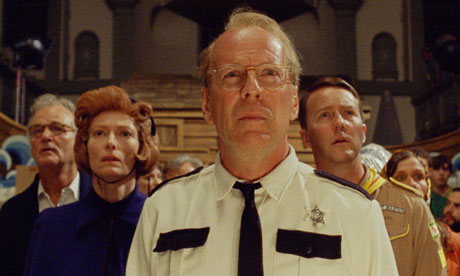
At first Moonrise Kingdom seems to try too hard to be eccentric and often has a very stagy quality, perhaps deliberately. Those aspects mark it unmistakably as the work of Wes Anderson and no worse for that. There are a couple of moments in the third act that stretch the audience's willing credulity, being on the point of clumsiness I think, but it would be a heartless viewer indeed who was not willing to forgive these facets, which give the film a fairy-tale quality reminiscent of Edward Scissorhands or The Truman Show, and are consistent with the Am-Dram sensibility of the piece.


MK's heart is pure gold, a delightful melding of the innocence and earnest enthusiasm of Arthur Ransom's 'Swallows and Amazons' with the sassy grit and knowing irreverence of Quentin Tarantino's 'True Romance'. The central relationship is delightful, his and her quirks and affectations of adulthood not in the least annoying (which is an achievement). Edward Norton is excellent (we expect no less) and Bruce Willis' turn is nicely understated. Tilda Swinton is also a standout and thankfully used sparingly otherwise her character would have overpowered the gentler souls around her.


At only 94 minutes it's tempting to think that the film would feel lightweight, but the arc of the story is well served by MK's compactness, and by the time it reaches the end there is nothing left unsaid. MK deserves to be considered among Wes Anderson's finest work. There are characters here to root for unlike those populating The Royal Tenenbaums and Steve Zissou: The Life Aquatic.

Hooray for Uncle Wes! Sandwiches and ginger beer all round!

Sunday, 17 June 2012

The Artistry and the Egotism

An ambitious and brilliantly realised film biography of the American artist Jackson Pollock, Ed Harris stars, directs and paints on-screen. Harris’ performance is a tour de force, superbly portraying a challenging (and challenged) individual, and Marcia Gay Harden is excellent (and rightly recognised by the Academy) as his wife, artist Lee Krasner.

It’s apparent from Mr. Harris' portrayal that Pollock was a difficult person to deal with and it seems clear that he had mental health issues – quite possibly being bipolar, in spite of his talents as an artist he is not a likable character for whatever reason.

But despite the fact that neither Pollock’s art nor his personality do anything for me, Mr. Harris’ film is absolutely compelling and a very rewarding watch. The painting scenes are remarkable, they have a hypnotic quality and in their raw creativity are a stark counterpoint to the destructive tendencies that the man exhibited at times. They also present moments of calm in the alcohol-fuelled whirlwind that apparently surrounded Pollock for periods of his life.

If you like biography I think you will enjoy this piece, it’s a career-topping performance and a brilliant portrayal of an intriguing talent and the people around him.

Four Thumbs Up


Beautifully constructed morality tale from Rupert Wyatt with some really remarkable visuals. The effects work and the actors’ interactions with their 'props' are so assured that the outcome is highly convincing to the point that you won’t notice the join, and it's a huge accomplishment that will (if there's any justice) deservedly catapult Mr. Wyatt into the big leagues.

It’s a good if rather predictable story, but satisfying to spot the delicately placed traces of continuity that link to the later phases of the PotA franchise. In the first half at least John Lithgow is the emotional heart of the film and his performance is extremely touching and effective. James Franco’s is a strong turn too and Freida Pinto provides a powerful counterbalance to Franco's character’s increasingly reckless pursuit of a cure. It’s also good to see Tom Felton casting off his robes and discarding his wand (although just as nasty as ever).

John Lithgow

In relation to Caesar and the other apes it is difficult to comprehend the skills that must be necessary to perform effectively with what must be highly invasive technology. Andy Serkis is obviously a highly skilled actor in his own right, as evinced by his performances as Ian Dury and in The Prestige, Brighton Rock and Little Dorrit (tv) to name a few, but is he really the only guy who can play these marquee motion capture roles? I don't mean to be critical, far from it, I think Mr. Serkis will be remembered as the first and possibly greatest exponent of this newest branch of thespian-ism, but only because of making the transition to 'live action'. I find it interesting to consider whether any of Serkis's fellow mocap-ers will ever have the profile that he has deservedly achieved.

Andy Serkis - I still say Bluetooth is yesterday's technology

In the end RotPotA is highly enjoyable effects romp but is best, perhaps unusually, not in its big set pieces but in the personal interactions at the film’s heart.

All four thumbs up - bring on the Dawn...

Groan Ups

Every bone in my body wanted to hate Grown Ups. Surely this would be another brain-dead Adam Sandler spliff, his partner in crime Senor Schneider’s presence like a red rag to a bull, and yes GU is often crass and tasteless, smeared with great dirty stains of crude and puerile humour, but there is something else going on here.

There is a resonance in the central theme of lost childhood and the simplicity of bygone days that speaks to our need for friendship and simple pleasures, and that enables me to forgive a lot of this film’s lazy failings. For me there was one reluctant laugh for every two inward groans, and shakes of the head were often followed by a nod of recognition and possibly even a smile.

There are some moments of effective slapstick and as we know from his better moments Sandler is capable of being likable. His posse of Kevin James, Chris Rock, David Spade and the ubiquitous Schneider have an easy camaraderie that is watchable, and their significant others Salma Hayek, Maria Bello, Maya Rudolph and Joyce Van Patten provide effective foils for all the nonsense. Ultimately there is a sound message at the heart of Grown Ups and this is what redeems it.

Infantile, misogynist, heart-warming fun for all the family.

Tuesday, 5 June 2012

X Marks the Spot


Take everything that was excellent about the first trilogy and put those ingredients in the hands of someone who knows exactly what they are doing with the comic book genre, then sit back and enjoy the results. Superb entertainment delivered by Matthew Vaughn of Kick-ass fame, directing an engaging and dynamic cast.

James McAvoy and Michael Fassbender are entirely convincing at Xavier and Lehnsherr, and they have strong support throughout a well-constructed story from both A-listers and up-and-coming young stars alike.

Michael Fassbender throws stuff around
Jennifer Lawrence is again worthy of great plaudits essaying the troubled Mystique and January Jones is the screen equivalent of superglue to the eyeballs. Kevin Bacon has no trouble convincing as the personification of evil and the action hinges around his hideous masterplan, which is straightforward in its scope, but as usual with X-men it's the personal relationships where most of the real fireworks are flying. Great stuff - essential viewing for hero fans.

January Jones does bling

Sunday, 3 June 2012

Cherchez Le Pterodactyl


Highly enjoyable historical hokum from the man who brought you Leon; Big Blue; Fifth Element; Subway; etc. Auteur Luc Besson presents a whimsical but nonetheless entertaining comic-book adaptation from the pen of Jacques Tardi (9 comics from 1976 to 2007).

The material presented here liberally plunders Indiana Jones’ locker and is chock full of the trappings of ancient Egypt, but Adele does not have the depth of (arguably) Spielberg’s greatest character. Nonetheless our spunky, no-nonsense yet glamorous heroine is played with great verve and style by Louise Bourgoin.


There is also a lot of humour in her performance, which is very engaging and drives the film forward – polite reserve is not a part of Adele’s armoury, but her impatience with others can perhaps be forgiven in view of her sister’s plight. It’s all a bit breathless and the plot does somewhat stagger from frame to frame in the way of a comic, but despite the other characters being little more than caricatures, and Adele’s motivation being very one dimensional (albeit noble), Mademoiselle Bourgoin’s charisma is more than enough to carry the film. Not taxing but loads of fun.

Louise Bourgoin

Captain Courageous

Whoa there, hang on a minute, Chris Evans is Johnny Storm a.k.a. The Human Torch, what the heck is going on here?! Initial concerns are quickly swept aside however since Mr. Evans was clearly born to play the iconic Captain America, whether in initial pint-sized and weedy form, or once transformed as if he’s been chiseled out of Mount Rushmore.


Chris & Haley
Great turns from an excellent cast, especially the hard-bitten Tommy Lee Jones; the deliciously frosty Haley Atwell; a gloriously malevolent Hugo Weaving, and the myopically intellectual Toby Jones – and not forgetting excellent work by Dominic Cooper as ‘old man’ Stark. The film is chock full of glorious rock ‘em, sock ‘em comic book action, and ‘Cap’ hits all the nails square on the head, from the frustration of his employment as a War Bond figurehead, to his fearless forays into the heart of enemy territory with his own band of brothers, all present and correct.


Dominic Cooper
It’s actually quite refreshing to meet a hero who is not flawed, as seems to have become the norm over the decades. Steve Rogers isn’t dark, he isn’t conflicted, nor is he guilt ridden (yet), he’s just out to punch old Adolf in the eye – although as it turns out he has bigger problems to face. The emotional centre of the film is nicely handled, not overplayed, there’s a war on after all and duty comes first, but there is still time for some brief, tender moments that add a romantic strand which is nicely played by Atwell and Evans.

General TLJ
The toning down of Cap’s costume is a wise move and allows the use of a more muted pallet of tones that helps to root the film firmly in the forties, and the production portrays the period beautifully. All this helps to set the film apart from the Marvel fare that we have been served up to date, and adds all the more to the enjoyment of it. One of the greatest pleasures however, as with ‘Thor’, is the anticipation of something greater, and there is a jarring closing sequence which is very well handled, another promise of things to come. Good, solid, square-jawed fun.

One cube to rule them all... Hugo Weaving


Friday, 1 June 2012

Watch The Right One

I previously ‘reviewed’ this without seeing the film because of my outrage at the original being remade, but I knew that was unfair, I’m glad that I have seen ‘Let Me In’ now. For one thing I think the title is better than ‘Let The Right One In’ which is a straight lift from the book. ‘Let Me In’ has the same muted palate as the original film and looks just as atmospherically grimy and dark. For me Chloe Moretz and Kodi Smit-McPhee are not quite as engaging as Lina Leandersson and Kare Hedebrant in the lead roles. It’s easy to see why Smit-McPhee’s character would be picked on and is called ‘little girl’ by the bullies because of his androgynous quality, but I think that quality is unnecessary for the story.

Elias Koteas - Kodi Smit-McPhee
In terms of the setting, on the one hand it is to director Matt Reeves’ credit that the feel is not overtly American. Other than some of the accents there is none of the flag waving, none of the trappings of the US of A (notwithstanding the Pledge of Allegiance, which didn’t jar for me), and Elias Koteas presence plus Ritchie Coster’s Slavic(?) gym teacher as central characters at least provide some link to the European original.

It’s clear that ‘Let Me In’ benefits from the ‘advantage’ of a bigger budget, but the occasional CGI almost acts as a barrier between the audience and the film. The car crash is a positive inclusion, very effectively done and quite a jump when it happens, then again the underpass scene is inferior, less convincing than the original for me.
Ultimately it’s a different film, more of a horror story and less of the fairy tale than the original is, and to me that says that Matt Reeves has, either deliberately or through misunderstanding the original, taken a different path, despite many of the scenes being lifted directly from Tomas Alfredsson’s film. To be kinder you could say they are lifted from the original screenplay, to the extent that John Ajvide Lindqvist is credited prominently. I find it quite objectionable that the credit is ‘written for the screen by Matt Reeves’ because the vast majority of the work was done by Tomas Alfredson and John Ajvide Lindqvist before him, and there is very little that is new, it is clearly a remake of the film and not a new adaptation of the book.

Richard Jenkins
For all that I did enjoy ‘Let Me In’, the performances of Chloe Moretz, Richard Jenkins and Elias Koteas are excellent, and the central relationship between Owen and Abby is well handled and nicely played, but in the end I think ‘Let Me In’ succeeds because of the utterly engaging original story and brilliant source material, and only served to remind me how good the original film is. If you haven’t seen either film, treat yourself to ‘Let The Right One In’ first.

Far Beyond Driven

Jaw-dropping piece of cinema from Nicolas Winding Refn, there isn't a weak link in the chain from the top-billed performances of Gosling and Mulligan down to the knuckle-dragging henchmen, everyone brings their A-game. Refn has a unique voice as his previous work (including Bronson and Fear X) ably demonstrates and this must be his strongest outing to date. Gosling's performance is beautifully empty, the epitome of 'spare' while Mulligan effortlessly illuminates the screen, making it impossible to tear ones eyes off her in much the same way as in 'An Education' (or anything else she's been in).

Carey Mulligan
These two performances alone would make an excellent film, but it is in the 'supporting' roles that 'Drive' is elevated from a good movie to a definitive piece of modern cinema that will stand out for years to come as a beacon of what can be achieved with total belief in a good project. Ron Perlman and Christina Hendricks know how to captivate an audience. Hendricks owns every one of her scenes in the peerless 'Man Men' and Perlman is the godfather of the twisted soul, but thankfully is given the chance to play it straight up here and does so to brutal effect, whereas Hendricks delivers a nicely judged if brief appearance transitioning from bravado to a much truer, baser emotion.


Bryan Cranston
These four performances are to be expected from the individuals in question, but the standouts are those ones that come from left field. Albert Brooks was for so long the straight man in funny movies but who knew he had this in him. His turn as Bernie Rose is every bit as menacing as De Niro at his best/'worst', but Brooks' foil is possibly even more surprising. Bryan Cranston, for so long delivering howlingly funny often slapstick comedy as Malcolm's dad, in 'Malcolm in the Middle', turns in a beautifully nuanced performance as Gosling's mentor Shannon. None of the main characters is entirely good or evil, with the probable exception of Mulligan's 'Irene' and Perlman's 'Nino' and it is perhaps that facet that makes 'Drive' as enthralling as it is.

Albert Brooks
'Drive' could be seen as yet another demonstration that so much that is exciting in modern storytelling is coming from Scandinavia, however I think it is actually a vivid illustration that the best cinema comes from the melting pot, with no barrier preventing directors, actors, writers and all the other creative fields from coming together. It's strong stuff in places, but if you can get past that you are in for one of the most memorable films in the last 20 years.